
Choosing a reliable Plastic Sheet manufacturer in China requires more than comparing prices. Global buyers need stable thickness, consistent surface finish, traceable materials, and dependable delivery. A sheet may look perfect under warehouse lighting, yet warp after heat exposure or fail during cutting. This guide examines ten established Chinese manufacturers through practical sourcing criteria. It considers production capacity, material options, quality systems, customization, packaging, and international service. Real purchasing decisions are rarely simple.
The selected companies serve industries including construction, packaging, signage, electronics, agriculture, and industrial fabrication. Their portfolios may include PVC, PP, PE, PET, ABS, acrylic, and other engineered materials. Technical data matters. Buyers should verify thickness tolerance, impact strength, temperature resistance, chemical compatibility, and color consistency before ordering. Factory audits, samples, inspection reports, and clear specifications can reduce avoidable disputes. Certifications deserve careful review, because a certificate alone does not guarantee every batch performs equally.
This overview reflects common export practices and manufacturer information, but it is not a substitute for independent due diligence. Rankings can change with equipment upgrades, raw-material costs, and service performance. Some suppliers may appear strong on paper yet respond slowly when problems arise. That weakness matters. Request current test documents, production samples, lead times, and warranty terms before committing. With careful comparison, global buyers can identify a Plastic Sheet partner that balances quality, flexibility, and long-term reliability.
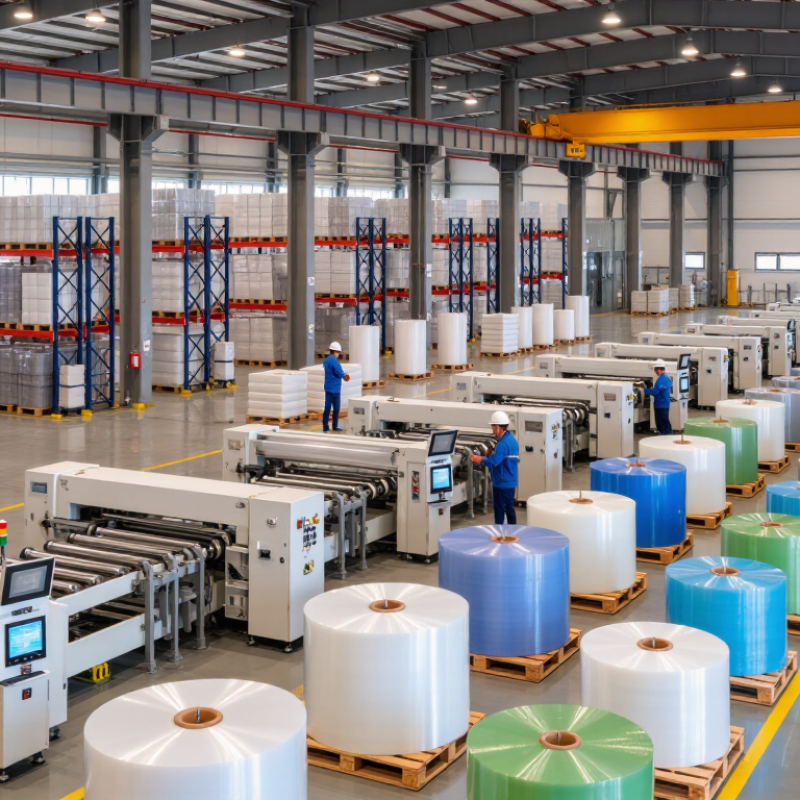
China’s plastic sheet manufacturing industry serves construction, packaging, agriculture, electronics, transport, and industrial fabrication. Production clusters combine resin suppliers, extrusion plants, machining workshops, and testing laboratories. This connected supply chain can support both standard orders and engineered specifications.
Common product types include polyethylene, polypropylene, PVC, polycarbonate, ABS, acrylic, PETG, and engineering-grade sheets. Thicknesses may range from flexible films to rigid plates over 50 millimeters thick. Surface options include smooth, textured, embossed, transparent, opaque, and anti-static finishes. Some sheets are designed for UV exposure, chemical contact, impact resistance, or thermal forming. Color matching is available, but samples remain essential.
Manufacturing methods include extrusion, calendering, casting, and compression molding. A serious supplier should provide resin data, thickness tolerance, flatness results, and batch traceability. Buyers should also review impact strength, heat resistance, moisture behavior, and applicable safety documentation. A 1.0-millimeter sheet can look acceptable while varying noticeably across its width. That small difference can affect thermoforming and assembly. Low pricing deserves careful inspection. Recycled content, packaging quality, and storage conditions may change performance. Factory visits, third-party testing, and pre-shipment inspections improve reliability, though they cannot remove every risk. Specifications sometimes remain incomplete. That is where better questions matter.

China’s plastic sheet industry supplies construction, packaging, electrical, automotive, signage and industrial fabrication markets. The chart compares representative densities of widely manufactured sheet materials, which helps global buyers evaluate weight, handling and application suitability.
Data source: typical engineering density ranges for commercial sheet materials. Actual density varies by grade, additives, reinforcement and manufacturing process. Values are shown in kg/m³.
Choosing among China’s top plastic sheet manufacturers requires evidence, not attractive catalogs. PlasticsEurope’s Plastics – the Facts 2023 reports global plastics production reached 400.3 million tonnes in 2022. This scale makes raw-material traceability essential. Ask whether the factory records resin grades, batch numbers, additives, and recycled content.
A serious evaluation starts with technical fit. Confirm sheet thickness tolerance, width stability, impact strength, surface finish, and temperature resistance. Request recent test reports using recognized ISO or ASTM methods. Check whether laboratories are independent.
A factory should also provide production samples, inspection records, and corrective-action reports. Small details matter. A 2-millimeter sheet may warp after outdoor exposure, even when its showroom sample looks perfect.
Capacity needs practical verification. Review extrusion lines, working widths, monthly output, maintenance schedules, and backup equipment. Supply-chain data from the International Energy Agency shows petrochemical feedstocks remain closely linked to energy-market volatility. Therefore, buyers should examine resin sourcing and price-adjustment clauses.
Factory audits should include worker safety, environmental controls, wastewater handling, and export documentation. Certifications help, but they are not proof of consistent performance. I would compare at least three suppliers using the same test protocol. My own caution is simple: a low quotation can reflect thinner material, weaker packaging, or missing inspection costs. That risk is easy to underestimate.
Global buyers need more than attractive catalogs when selecting plastic sheet suppliers. The profiles below focus on practical evidence, production experience, and dependable communication.
An extrusion specialist produces stable PP and PE sheets for tanks, liners, and fabrication projects.
A precision processor focuses on PC and PMMA sheets, using controlled thickness measurements and surface inspections.
A recycled-material manufacturer supplies HDPE sheets with batch records and documented material percentages.
An engineering-plastics producer serves machining projects with nylon, POM, and reinforced sheet options.
A thermoforming specialist develops sheets with consistent heating behavior, useful for trays, covers, and industrial housings.
Another manufacturer concentrates on electrical insulation sheets, with test reports for relevant performance requirements.
A color and embossing specialist supports custom surfaces, although small orders may require longer setup times.
A high-volume producer maintains multiple extrusion lines and offers stable supply for large construction projects.
A warehouse-based supplier keeps common sheet sizes ready, helping buyers reduce waiting time.
An export-focused manufacturer combines inspection records, protective packaging, and multilingual technical support.
Ask for samples.
Reliable factories should explain resin grades, tolerances, and testing methods clearly.
Buyers can also request production photos, inspection reports, and traceability documents before placing large orders.
Factory audits remain valuable, but they are not perfect; a clean visit cannot replace ongoing quality checks.
Some suppliers respond quickly before payment, then communicate less effectively during production.
That weakness deserves attention. Clear drawings, agreed tolerances, and written approval samples reduce avoidable disputes across borders.
China Top 10 Plastic Sheet Manufacturers for Global Buyers
Material selection should follow the application, not a factory’s catalog. Polyethylene sheets suit chemical tanks and liners, while polypropylene handles repeated washing and moderate heat. Polycarbonate offers impact resistance for machine guards. PVC remains practical for corrosion-resistant panels. Grand View Research valued the global plastic sheets market at about USD 87.7 billion in 2023, with steady growth expected through 2030. That demand increases material choices, but also creates confusion.
Quality comparisons need measurable evidence. Ask for thickness tolerances, surface flatness, impact strength, and batch traceability. ASTM and ISO test methods can verify tensile performance, water absorption, and thermal behavior. ISO 9001 certification supports process control, but it does not guarantee every sheet is perfect. A polished sample may hide inconsistent edges or internal stress. Request samples from different production batches. Small details matter.
Production capability separates export-ready suppliers from ordinary converters. Check extrusion width, maximum sheet length, color consistency, cutting accuracy, and monthly capacity. PlasticsEurope reported global plastics production of approximately 414 million tonnes in 2023, showing the scale of this industry. China represented a major share of that output, yet capacity alone proves little. Buyers should inspect inspection records, packaging methods, lead-time history, and corrective-action reports. One weakness remains easy to miss: recycled content may vary between batches unless documented clearly.
| Market Profile | Primary Materials | Common Grades and Properties | Typical Applications | Common Thickness Range | Typical Sheet Size Capability | Main Production Processes | Typical Quality and Export Capabilities |
|---|---|---|---|---|---|---|---|
| Profile 01 | PVC Rigid PVC and expanded PVC |
Good chemical resistance, low water absorption, flame-retardant formulations available, easy to fabricate | Signage, partitions, wall cladding, advertising boards, chemical tanks, fabricated equipment | Approximately 1–30 mm | Standard panels commonly supplied in 1,220 × 2,440 mm; larger custom formats may be available | Extrusion, calendaring, trimming, surface lamination | Color matching, thickness checks, surface inspection, packing for container shipment, custom cutting and CNC processing |
| Profile 02 | PP Polypropylene sheet |
Low density, strong chemical resistance, fatigue resistance, suitable for welded fabrication | Acid tanks, plating equipment, laboratory furniture, liners, food-processing components | Approximately 2–50 mm | Commonly available around 1,500 × 3,000 mm; special sizes depend on extrusion equipment | Flat extrusion, hot bending, welding, CNC cutting | Thickness and flatness control, visual inspection, batch identification, export-grade protective film and pallets |
| Profile 03 | HDPE High-density polyethylene |
High impact strength, moisture resistance, good chemical resistance, low-temperature toughness | Water tanks, geomembrane-related fabrication, chute liners, cutting boards, industrial liners | Approximately 2–100 mm | Typical formats range from 1,220 × 2,440 mm to approximately 2,000 × 6,000 mm | Extrusion, compression molding, CNC routing, welding | Density and thickness verification, impact-oriented material selection, surface checks and customized export packaging |
| Profile 04 | ABS ABS and flame-retardant ABS |
Good impact resistance, attractive surface finish, thermoformability, available in textured and colored surfaces | Automotive trim, equipment housings, luggage components, sanitary products, thermoformed parts | Approximately 0.8–12 mm | Extruded rolls or sheets; common sheet widths are approximately 1,000–2,000 mm | Extrusion, thermoforming, embossing, vacuum forming | Surface gloss and texture control, thickness measurement, color consistency checks, protective film and international packing |
| Profile 05 | Acrylic PMMA cast and extruded sheet |
High optical clarity, weather resistance, UV stability, good surface hardness, polished appearance | Displays, retail fixtures, lighting diffusers, architectural glazing, signage and decorative panels | Approximately 1–50 mm | Common cast formats include 1,220 × 2,440 mm; larger and custom sizes may be produced | Cell casting, extrusion, polishing, laser cutting, CNC machining | Light transmission and color control, thickness checks, masking film, corner protection and export-crate options |
| Profile 06 | PC Polycarbonate sheet |
Very high impact resistance, transparency, heat resistance, available with UV and flame-retardant treatments | Machine guards, safety glazing, greenhouse panels, skylights, protective barriers and noise screens | Approximately 0.8–20 mm for solid sheet; multiwall products vary by structure | Widths commonly range from approximately 1,220 to 2,100 mm; continuous lengths may be available | Extrusion, co-extrusion, multiwall forming, UV-cap-layer application | Impact and thickness checks, optical inspection, UV-side identification, protective film and roll or pallet shipment |
| Profile 07 | PETG Glycol-modified PET sheet |
High clarity, good impact resistance, easy thermoforming, suitable for applications requiring clean appearance | Point-of-sale displays, medical packaging, protective covers, trays and formed industrial parts | Approximately 0.5–12 mm | Typical widths range from approximately 600–2,000 mm; sheets and rolls are commonly offered | Extrusion, thermoforming, die cutting, CNC routing | Clarity and haze inspection, thickness checks, clean-surface handling, masking and export packing for formed products |
| Profile 08 | PE LDPE, LLDPE and UHMW-PE sheet |
Low friction, chemical resistance, flexibility in lower-density grades, excellent abrasion resistance in UHMW-PE | Wear strips, conveyor components, hopper liners, packaging parts, industrial sliding surfaces | Approximately 1–100 mm | Common panels are around 1,220 × 2,440 mm; thick wear sheets may be supplied in larger formats | Extrusion, compression molding, skiving, CNC machining | Material-grade traceability, thickness and flatness checks, friction-oriented grade selection and reinforced export packaging |
| Profile 09 | PVDF Fluoropolymer sheet |
Excellent chemical resistance, UV stability, high purity options, strong performance in corrosive environments | Semiconductor equipment, chemical-processing systems, pump components, linings and high-purity fabrication | Approximately 1–30 mm | Custom-cut panels are common; standard formats often range from approximately 1,000 × 2,000 mm to 1,220 × 2,440 mm | Compression molding, extrusion, CNC machining, specialized welding | Strict material identification, dimensional inspection, controlled handling, batch documentation and heavy-duty export packaging |
| Profile 10 | PEEK Engineering thermoplastic sheet |
High-temperature performance, strong wear resistance, chemical resistance and dimensional stability | Aerospace components, semiconductor parts, electrical insulation, medical components and precision machinery | Approximately 0.5–100 mm | Usually supplied as precision panels or machined blanks; common formats are approximately 300–1,000 mm wide | Compression molding, extrusion, annealing, CNC machining | Dimensional inspection, material certificates when requested, controlled machining, small-batch customization and secure export packing |
When comparing China’s top 10 plastic sheet manufacturers, buyers should examine more than price and catalog size. Product experience matters. Ask for samples cut from actual production lines, not polished showroom pieces. Check thickness tolerance, surface finish, color consistency, and warping after heat exposure. A reliable supplier should provide recent test records, material certificates, and traceable batch numbers. Small details often reveal large problems.
The OECD’s Global Plastics Outlook reports that global plastic production reached 460 million tonnes in 2019, while only 9% was recycled. This makes material transparency increasingly important. Confirm resin type, recycled content, additives, and processing temperature. Request documentation aligned with relevant ISO testing methods and destination-market requirements. Do not accept “export quality” as evidence. It is not a technical standard.
Factory capability also deserves close inspection. Review extrusion equipment, laboratory instruments, inspection frequency, and corrective-action records. Ask how rejected sheets are isolated and documented. Independent audits can verify what brochures cannot. Lead time should be tested with a pilot order, especially for custom widths or protective films. Communication matters, too. Slow replies create costly ambiguity. Still, no supplier is perfect. I would record weaknesses openly, including packaging damage, delayed samples, or unclear tolerances, then judge whether the response is practical and honest.