How to Choose the Right PVC Board for Your Project?
When embarking on a project that requires material choices, the significance of the right PVC board cannot be overlooked. These boards bring versatility to a variety of applications, from construction to crafting. However, not all PVC boards are created equal.
Choosing the right PVC board involves understanding its properties. For example, thickness matters for durability, while surface finish can influence aesthetic appeal. Some boards may warp under heat, while others may resist moisture. This variability makes the selection process crucial for success.
Moreover, different projects call for different characteristics. An indoor project may have different requirements than an outdoor one. Reflecting on your specific needs can lead to better choices. The ideal PVC board should enhance the project’s overall quality. Sometimes, less common options might offer surprising benefits. Choosing wisely can significantly impact the outcome.
Factors to Consider When Selecting PVC Board Types for Your Project
When selecting the right PVC board for your project, it's crucial to consider several key factors.
First, assess the board's thickness and density.
Thicker boards typically offer greater strength. According to industry reports, a density of around 1.4g/cm³
is common for durable options. Think about your project needs as well; lightweight boards may suffice for less demanding applications.
Next, consider the board’s environment. PVC boards can be suitable for indoor and outdoor use, but
UV resistance is vital for external applications. Research indicates that boards
with UV additives can last longer in sun-exposed areas, reducing maintenance costs over time. Ensure you inquire about these specifications
before making a decision.
Tips: Always test a small sample before buying in bulk. This allows you to assess the appearance and texture.
Pay attention to the color fading over time, especially in high-sun exposure areas. Lastly, don’t forget to think about
the environmental impact. PVC is recyclable, but it’s worth investigating options that have lower environmental footprints.
Choose wisely for sustainability.
Understanding PVC Board Grades and Their Impact on Performance
When selecting a PVC board, understanding the grades is essential. PVC boards come in various grades, each designed for specific applications. Higher grade boards typically feature enhanced strength and durability. For instance, engineering reports indicate that grade A PVC boards can withstand pressures up to 120 psi, making them ideal for construction uses.
Conversely, lower grade options may excel in cost-effectiveness but risk compromising performance. Reports show that using budget-grade boards in high-stress environments can lead to premature failure. Data indicates that 30% of projects report issues due to poor material selection. Recognizing these factors is vital for long-term success.
Visualizing the specifics is key. Grade B boards are often used in less demanding applications. They are lightweight and more affordable, but their lifespan might be significantly shorter. A study found that 45% of such boards suffered from warping or discoloration within five years. Choosing the correct grade can indeed save money, but the long-term implications are worth careful consideration.
Key Physical Properties of PVC Boards: Strength, Durability, and Flexibility
When selecting a PVC board, understanding its physical properties is essential. Strength is a critical factor. PVC boards can withstand significant impacts and loads, making them suitable for various applications. Industry data shows that rigid PVC boards have a tensile strength of around 50 MPa. This indicates their ability to resist deformation under stress. However, projects with excessive weight may require additional support to maintain structural integrity.
Durability is another vital property. PVC boards are resistant to moisture, chemicals, and UV radiation. Reports indicate that properly manufactured PVC can last over 30 years without significant degradation. Yet, outdoor exposure can still lead to color fading. This could affect aesthetics, so consider protective coatings. Balance between longevity and appearance is crucial in design choices.
Flexibility also plays an important role. PVC can be manufactured in varying thicknesses and sizes. This allows for easy customization to fit specific project needs. The standard thickness often ranges from 3mm to 25mm. However, thinner boards might be more susceptible to bending. You might face challenges when using them for heavy-duty applications. Making informed decisions on thickness ensures both functionality and durability.
Key Physical Properties of PVC Boards
This chart illustrates the key physical properties of PVC boards, showcasing their strength, durability, and flexibility. Strength is measured in megapascals (MPa), durability is showcased in years, and flexibility is indicated in millimeters (mm). These properties are essential for determining the right PVC board for specific projects.
Application-Specific Recommendations for PVC Board Usage
When selecting a PVC board for your project, understanding its applications is crucial. PVC boards are widely used in construction, signage, and furniture. Each application requires specific features for optimal performance. For example, in construction, a board with high impact resistance is vital, especially in high-traffic areas. A report from the Plastic Industry Association indicates that PVC's durability can enhance a project's lifespan by up to 30%.
In signage, clarity and color retention are essential. Choosing a board that maintains its appearance over time can attract clients and increase visibility. According to industry standards, UV-stabilized PVC boards are recommended for outdoor use. This feature helps prevent fading, ensuring your sign remains vibrant.
Tips: Always ask for samples before making a decision. Testing a small section can highlight potential issues early. Additionally, consider the thickness of the board. A thicker PVC board can offer better structural integrity, especially in heavy-duty applications. However, cost may increase with thickness, creating a balance between budget and quality.
Be aware that not all PVC boards are created equal. Some may warp or discolor under specific conditions. Researching different suppliers can reveal discrepancies in quality. Try to gather feedback from customers on their experiences with various types. Doing so can guide your choice and prevent future regrets.
How to Choose the Right PVC Board for Your Project? - Application-Specific Recommendations for PVC Board Usage
| Application |
Recommended Thickness |
Color Options |
Benefits |
| Interior Signage |
3-5 mm |
White, Black, Blue |
Lightweight, Easy to Cut |
| Outdoor Signage |
5-10 mm |
Bright Colors, UV Resistant |
Durable, Weather Resistant |
| Display Fixtures |
4-6 mm |
Custom Colors Available |
Innovative Design, Customizable |
| Furniture |
12 mm |
Wood Grain, Solid Colors |
Stylish, Easy to Maintain |
| Wall Panels |
6-12 mm |
Textured, Glossy Finishes |
Insulating, Soundproofing |
Cost Analysis: Comparing PVC Board Options for Budget Efficiency
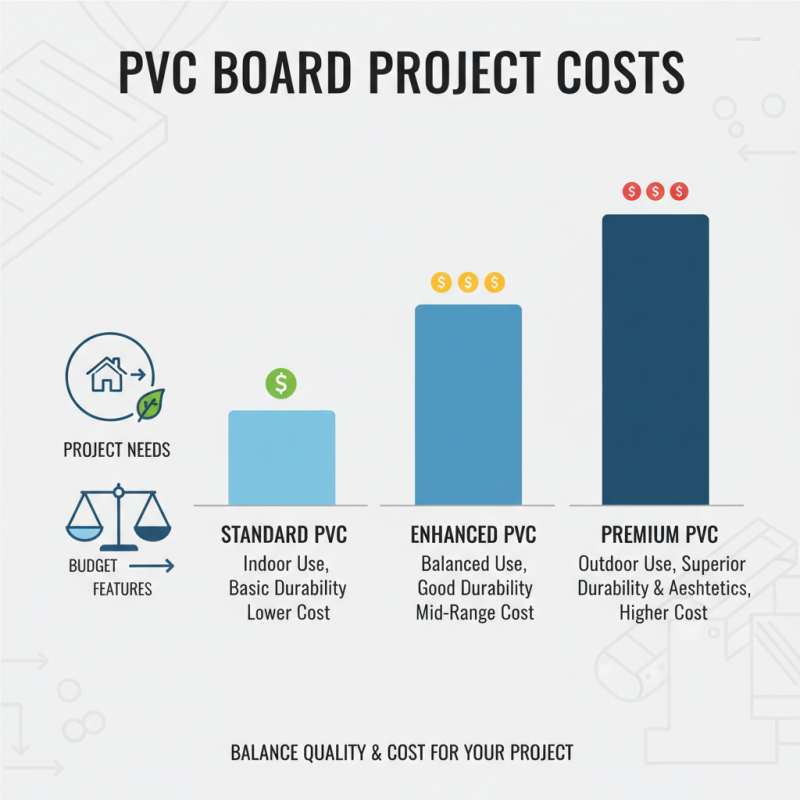
When embarking on a project that involves PVC boards, understanding the costs is crucial. Different types of PVC boards vary significantly in price. Higher-quality options often come with a full range of features. They may offer better durability and aesthetics but at a higher cost. It’s essential to balance your budget with your specific project needs. Consider why you need the board. Is it for outdoor use? Durability is key here. For indoor projects, cost could take priority.
Comparing prices across various suppliers is wise. While one might offer a cheaper option, investigate the material composition. A lower price might mean a thinner board that warps easily. You'll want longevity in your investment. Look at customer reviews or ask for recommendations. Don’t shy away from seeking advice. It's valuable. Sometimes, opting for a slightly increased budget allows for better material quality.
Staying within budget is vital, but cutting corners could lead to regret. Achieving a project’s vision often depends on using appropriate materials. Calculate long-term benefits against initial costs. In some cases, spending a bit more upfront saves money down the line. Consider total lifecycle costs, not just the sticker price. Reflect on your choices carefully to avoid costly mistakes.